Quick summary
- Street trees in the City of Buffalo: yes. Pruning, planting or removing a tree in the city right-of-way (usually the strip between the sidewalk and the street) needs a free DPW Tree Work Permit, and the work must be done by a contractor with a City of Buffalo license.
- Trees in your own yard in the city: generally no permit for a single residential tree, but confirm through 311 if you’re in a historic district or the removal is part of a construction project.
- Suburbs have their own rules, and they differ a lot. Amherst and Clarence generally let homeowners remove trees on an ordinary developed house lot. Cheektowaga is stricter: a permit can be needed even for one large backyard tree.
- Town and village street trees are off-limits to homeowners almost everywhere. Call the town highway or forestry department instead.
- Dead or hazardous trees are exempt under the Amherst, Cheektowaga and Clarence tree laws. Document the hazard with photos before removal.
- Check your HOA, too. Subdivision covenants can be stricter than the town.
Before we cut a single branch, one of the questions we hear most is: “Do I need a permit for this?” It’s a fair question. Nobody wants a fine from the city, a stop-work order from the town, or a letter from the HOA after the tree is already in the chipper.
The short answer for most Buffalo homeowners is this: if the tree is on your own property, you usually don’t need a permit to remove it. If it’s a street tree in the public right-of-way, you do, and in the City of Buffalo it has to be handled by a licensed contractor. Things get more nuanced in the suburbs, where each town writes its own tree law, and at least one (Cheektowaga) can require a permit for a single large tree in your own yard.
At Falcon Tree Service we work across the city and Erie County, so we check these rules on every job as part of our tree removal service. This guide pulls together what we’ve confirmed from the official city and town codes, so you know where you stand before you call anyone.
Table of contents
First, figure out who owns the tree
Almost every permit question comes down to one thing: is this a public tree or a private tree? Here’s how to tell.
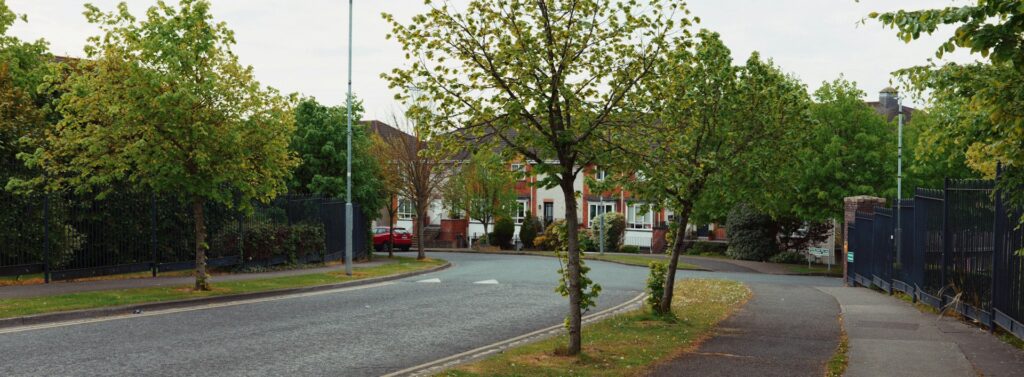
- Between the sidewalk and the street: in most of Buffalo and the older inner-ring suburbs, this strip (sometimes called the tree lawn or boulevard) is part of the public right-of-way. A tree growing there usually belongs to the city, town or village, even though it’s in front of your house.
- No sidewalk? The right-of-way often extends several feet past the edge of the road, so a tree near the curb may still be public. Your survey or the town’s highway department can confirm.
- In your front, side or back yard, inside your property line: that’s a private tree, and it’s your responsibility.
- Right on the property line with a neighbor: a boundary tree is jointly owned. Talk to your neighbor and get agreement in writing before removing it.
If you’re not sure, call 311 in the city or your town hall in the suburbs.
Dead or dangerous tree on your property?
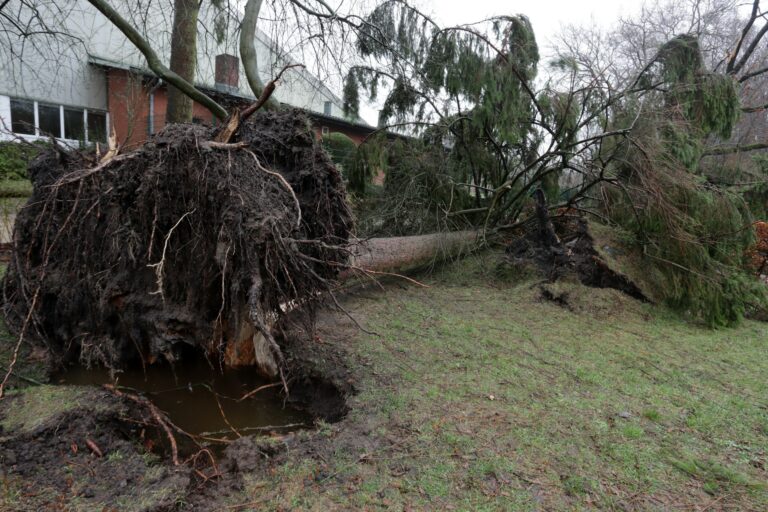
Hazard trees are exempt from permits in Amherst, Cheektowaga and Clarence, so there’s no reason to wait. We’ll inspect it, document the hazard with photos, and give you a free written quote.
City of Buffalo: street trees vs. yard trees
Street trees (the public right-of-way)
The City of Buffalo’s Bureau of Forestry looks after the public urban forest, which includes every street tree in the city right-of-way plus trees in parks and on city-owned lots. According to the city’s own Forestry FAQ, here’s how it works:
- A permit is required to prune, plant or remove any tree in the city right-of-way. It’s a DPW Tree Work Permit, and there’s no fee.
- Residents can do minor work only. You’re allowed to do light care on the street tree in front of your house, as long as you don’t use power tools or a ladder.
- Everything else needs a licensed contractor. Major work on right-of-way trees has to be done by a tree service with a current City of Buffalo landscape license, and the permit application asks for that license number.
- Start with 311. To request an inspection, removal, trimming, or help with a root or sewer conflict, call 311 or submit a request online.
- Healthy trees aren’t removed just because roots are a nuisance. The city says it doesn’t automatically remove healthy street trees over sidewalk or sewer conflicts; it inspects and works with your contractor to find a fix that saves the tree where possible.
In practice, that means if the big street maple in front of your house is dead or dropping limbs on your car, your first step is a 311 request, not a call to whoever has a chainsaw. If the city agrees it needs to go, it may remove it itself or permit a licensed contractor to do the work.
Trees on your own property in the city
For a single tree that’s fully on your own lot, you generally don’t need a permit in the City of Buffalo. There are a few situations where you should check first:
- Construction or site plans. If the removal is part of a building project, the tree may be covered by your approved plans.
- Historic districts. If your home is in a local preservation district, ask whether landscape changes need review before you proceed.
- Trees near utility lines. You don’t need a permit, but trees touching primary lines must be handled by the utility or a line-clearance qualified crew.
Quick answers: City of Buffalo trees
Can I cut down the tree in front of my house in Buffalo?
Not if it’s in the right-of-way. That’s a city tree. Request an inspection through 311, and any major work has to be permitted and done by a city-licensed contractor.
Does the Buffalo tree work permit cost anything?
No. The city’s DPW Tree Work Permit for right-of-way trees is free.
The city tree’s roots are lifting my sidewalk. Will they remove it?
Not automatically. The city inspects root and sidewalk conflicts and usually looks for a repair that keeps a healthy tree. Call 311 to start the process.
Not sure whose tree it is? We’ll tell you.
When Falcon Tree Service comes out for a free estimate, we’ll confirm whether the tree is yours or the city’s, tell you if a permit is needed, and handle the permit questions for you. Call [PHONE] or request an estimate.
Suburban tree permit rules around Buffalo
Once you leave the city limits, each town and village sets its own rules, and they aren’t all alike. Amherst and Clarence mostly leave ordinary house lots alone, while Cheektowaga can require a permit for a single large tree. Here’s what we’ve confirmed from the official town codes.
| Municipality | Where the rules live | What it means for most homeowners |
|---|---|---|
| City of Buffalo | Bureau of Forestry; DPW Tree Work Permit | Free permit and licensed contractor for right-of-way trees. Single private trees generally don’t need a permit. |
| Town of Amherst | Town Code Chapter 179 (Trees) | Permit needed for trees over 4″ caliper on private land, except on residential lots of 1 acre or less, hazard trees, and a few other cases. Town street trees need the Highway Superintendent’s permission. |
| Village of Williamsville | Village code (separate from the Town of Amherst) | Check with the village directly; its rules are separate from Amherst’s. |
| Town of Cheektowaga | Town Code Chapter 229 (Trees) | Stricter. On a developed lot of ½ acre or less, trees 12″ caliper or larger need a permit (smaller trees are exempt). On bigger or vacant lots the threshold is 4″. Hazard trees and some small pre-1992 lots are exempt. No fee for 3 or fewer trees on a residential lot. |
| Town of Clarence | Chapter 131 (Landscape & Tree Conservation) | Homeowners in an existing residential neighborhood can remove trees of any size by right, as can anyone removing dead, diseased or hazardous trees. Permits apply to clearing, development, more than 10 trees in a setback area, and street or park trees. |
| Tonawanda, West Seneca, Orchard Park, Hamburg, Lancaster and villages | Each town or village code | Rules vary. Call the building department before removing trees on a large or vacant lot, or as part of construction. |
Amherst
Amherst takes its trees seriously. Under the town’s tree law, Chapter 179, you generally need a permit from the Commissioner of Building to cut down a tree larger than 4 inches in caliper on private land. But the code lists exceptions, and the big one covers most homeowners: an owner removing trees on residential property of one acre or less doesn’t need a permit. Trees that have become a danger to people or property are also exempt. So for a typical house lot in Snyder, Eggertsville or Getzville, a backyard removal usually doesn’t need one.
Two situations still call for care. First, the town won’t issue a removal permit for trees in a regulated wetland without approval from the state or federal agency that regulates it. Second, street and park trees are off-limits: the code says no one may remove them without the Highway Superintendent’s permission, and the town’s Highway Department tree policy says residents are prohibited from removing town-owned trees. Living in the Village of Williamsville? The village has its own rules, so check with village hall.
Cheektowaga
Cheektowaga is the one to watch. Its tree law, Chapter 229, starts from the position that removing any tree needs a permit from the Town Building Inspector, and then lists exceptions. The ones that matter most to homeowners:
- Developed lots of ½ acre or less: trees under 12 inches in caliper (measured six inches above the ground) are exempt. A mature maple or oak is often bigger than that, so it may need a permit.
- Developed lots over ½ acre, or vacant land: only trees under 4 inches are exempt.
- Hazard trees: trees that have become a danger to people or property because of disease, accident or natural forces are exempt.
- Older small lots: residential lots developed before 1992 that are no more than 10,200 square feet and 60 feet wide are exempt.
There’s no application fee if your property is residential and you’re removing three or fewer trees. Removing more than three can trigger replacement planting, typically one new tree for each one removed. Penalties for skipping a required permit can include fines and a civil penalty based on the tree’s value, so it’s worth a quick check. The town’s tree removal permit application is handled through the Building Department.
Clarence
Clarence’s Landscape and Tree Conservation law is written mainly for development, and it’s quite homeowner-friendly. It specifically allows, by right, trimming, pruning or removing trees of any size by an individual property owner in an existing residential neighborhood, along with removing dead, diseased or hazardous trees and emergency removals. Permits apply to things like clearing more than a quarter acre, removing more than 10 trees in a regulated setback area, clear cutting, and removing any street or park tree. If you’re on a large wooded lot or planning land clearing, call the Planning and Zoning office first.
Quick answers: suburban permits
Do I need a permit to remove one tree from my backyard in Amherst?
Usually not. Amherst exempts owners removing trees on residential property of one acre or less. Town-owned street trees are a different matter: residents can’t remove them.
Do I need a permit to remove a big tree in Cheektowaga?
Possibly. On a developed lot of half an acre or less, trees 12 inches or more in caliper need a permit unless they’re hazardous or your lot qualifies for the small-lot exemption. Check with the Building Department first.
Are dead or dangerous trees exempt?
In Amherst, Cheektowaga and Clarence, yes: all three exempt trees that have become a danger to people or property. Take photos of the hazard before removal in case anyone asks later.
What happens if I remove a tree without a required permit?
Towns can issue fines and require replacement planting. It’s much easier to make one phone call first.
In Amherst, Cheektowaga or Clarence? We check your town’s rules for you.
Every Falcon Tree Service estimate includes a permit check, so you’ll know exactly what’s required before any work starts. Free, with no pressure.
Other rules that can apply (even without a town permit)
- HOA covenants. Many newer subdivisions in Amherst, Clarence and Orchard Park require written board approval before removing trees, no matter what the town says.
- Approved site and landscape plans. Commercial properties and some newer homes have approved landscape plans. Removing a tree shown on the plan can require an amendment.
- Utility lines. If a tree is touching or near a primary power line, the utility or a line-clearance crew must handle that part of the work. Never cut near lines yourself.
- Wetlands and stream corridors. Clearing in or near regulated wetlands can involve state or federal rules. This comes up on larger rural lots in the outer towns.
- Boundary trees. A tree on the property line belongs to both neighbors. Get agreement in writing before removal.
A simple 5-step permit check before any removal
- Locate the tree relative to the sidewalk, curb and property line.
- Identify your municipality. Remember that villages like Williamsville, Kenmore and East Aurora can have rules separate from the surrounding town.
- Check the tree’s condition. Is it dead, dying or a clear hazard? Take photos. Our guide on how to tell if a tree is dead can help.
- Call 311 (city) or the building department (suburbs) if the tree is public, the lot is large or vacant, or you’re removing several trees.
- Check your HOA documents if you live in a subdivision.
Or skip the phone calls and let a local crew do it. Checking permits is part of every Falcon Tree Service estimate.
We handle the permit questions for you
From Buffalo street trees to backyard removals in Amherst, Cheektowaga, Clarence, West Seneca and Orchard Park, Falcon Tree Service checks the rules before we start, so you don’t have to. Free estimates. Call [PHONE] or book online.
How permits affect cost and timing
Permits rarely change the price much: Buffalo’s right-of-way permit is free, and Cheektowaga charges nothing for three or fewer trees on a residential lot. What they change is timing, since an inspection or review can add days or weeks. For what actually drives the price, see our Buffalo tree removal cost guide; if a tree has already hit your home, read whether homeowners insurance covers tree removal in New York.
Frequently asked questions
Do you need a permit to remove a tree in Buffalo, NY?
For a street tree in the city right-of-way, yes: a free DPW Tree Work Permit and a city-licensed contractor. For a single tree on your own property, generally no, but check through 311 if you’re in a historic district or the removal is part of construction.
Who is responsible for the tree between the sidewalk and the street?
In the City of Buffalo, that’s typically a city street tree maintained by the Bureau of Forestry. In most suburbs, it’s the town or village. Contact them rather than removing it yourself.
Can my tree company get the permit for me?
Yes, and a good one will. For City of Buffalo right-of-way work, the permit application asks for the contractor’s city license number.
Do I need a permit to trim a tree?
On your own property, generally no. For city street trees in Buffalo, even pruning requires a permit unless it’s minor work done without power tools or a ladder.
Does my neighbor need my permission to cut branches over their side?
Generally, neighbors can trim branches that overhang their property up to the line, as long as they don’t damage or kill the tree. Talking first saves a lot of trouble.
Talk to a Buffalo crew that checks the rules first
Tree permits aren’t complicated once you know who owns the tree and which town you’re in. The rules are just scattered across city FAQs, town codes and HOA documents. Sorting that out is part of our job.
Learn more about our tree removal service, or see local pages for tree service in Amherst and tree service in Clarence. For general guidance on hiring a qualified tree care company, the International Society of Arboriculture’s TreesAreGood.org is a helpful resource.
Get a free estimate and a straight answer on permits
Falcon Tree Service | [Street address], Buffalo, NY [ZIP] | [PHONE] | Open [hours], 24/7 for emergencies.
Contact us online or find us on Google Maps. If we’ve helped you, a quick Google review helps your neighbors find us.
Disclaimer
This article summarizes publicly available municipal rules as of October 2026 for general information only. It is not legal advice. Tree ordinances, fees and procedures change, and exceptions depend on your specific property. Always confirm requirements with your city, town, village or HOA before removing a tree. Falcon Tree Service is a tree care company, not a government agency.
Leave a Reply