Quick summary
- Most tree removals in Buffalo and the surrounding suburbs cost between $300 and $3,000. Very large or hazardous trees over a house can run $5,000 or more.
- Height and trunk size set the starting price, but access and what’s underneath the tree (roof, garage, power lines, fence) move it the most.
- Dead ash trees, split silver maples and storm-damaged trees cost more because they’re unpredictable to climb and cut.
- Stump grinding, log hauling and emergency call-outs are usually priced separately, so always ask what’s included.
- Late fall and winter can be a smart time to book: frozen ground protects your lawn and schedules are more flexible.
If you’ve got a tree in your yard that’s dead, leaning toward the house, or just too big for the space, the first question is almost always the same: how much is this going to cost? The honest answer is that tree removal in Buffalo usually costs somewhere between $300 and $3,000, and the number depends far more on where the tree is standing than on the tree itself.
At Falcon Tree Service, we give estimates across Buffalo and Erie County every week, from tight backyards in North Buffalo and the Elmwood Village to big wooded lots in Clarence and Orchard Park. This guide walks through the real price ranges we see locally, what drives a quote up or down, and how to make sure you’re comparing quotes fairly. If you already know you need a tree taken down, you can go straight to our tree removal in Buffalo page and request a free estimate.
Table of contents
- How much does tree removal cost in Buffalo?
- What drives the price of a tree removal?
- Buffalo-specific things that affect your tree removal
- What’s included in a Falcon Tree Service removal quote
- How to save money on tree removal
- Red flags when comparing cheap quotes
- Does homeowners insurance pay for tree removal?
- Frequently asked questions
- Get an honest quote from a local Buffalo crew
How much does tree removal cost in Buffalo? (2026 price ranges)
The table below shows typical ranges for residential tree removal in the Buffalo area. Treat these as a starting point. Two trees of the same height can be priced very differently if one is in an open front yard and the other is wedged between a garage and a neighbor’s fence.
| Tree size | Typical examples in WNY | Typical cost range |
|---|---|---|
| Small (under 30 ft) | Ornamental pear, crabapple, young spruce | $300 – $700 |
| Medium (30–60 ft) | Norway maple, mature spruce, smaller ash | $700 – $1,600 |
| Large (60–80 ft) | Silver maple, red oak, mature ash | $1,500 – $3,000 |
| Very large or high-risk (80 ft+ or over structures) | Old silver maples, cottonwoods, dead ash over a roof | $2,500 – $5,000+ |
| Stump grinding (add-on) | Per stump, depends on diameter | $150 – $400 |
Keep in mind that most quotes include cutting the tree down, chipping the branches, and cleaning up the yard. Hauling away large trunk sections, splitting firewood, and grinding the stump are often listed as separate line items. We break down stump costs in more detail in our stump grinding cost guide, because a lot of homeowners are surprised to learn it isn’t automatically part of a removal.
Want an exact price for your tree?
Ranges only tell you so much. We’ll come out, look at the tree and what’s around it, and give you a written quote. Free, with no pressure.
What drives the price of a tree removal?
When we walk a property to write an estimate, we’re really answering one question: how much time, equipment and risk will it take to get this tree on the ground safely? Everything below feeds into that.
1. Height and trunk diameter
Bigger trees mean more wood to cut, more rigging, more chipping and more hauling. Height matters most because it decides whether we can fell the tree in one piece or have to take it down in sections from the top.
2. What’s underneath and around the tree
This is the single biggest factor. A 60-foot maple in an open side yard might come down in a couple of hours. The same tree hanging over a roof, a detached garage and a neighbor’s pool has to be climbed and lowered piece by piece with ropes, which can double the labor. Buffalo’s older neighborhoods, with narrow lots and driveways, tend to fall into this second category.
3. Access for equipment
If we can pull a chipper or a lift right up to the tree, the job moves faster. If everything has to be carried through a side gate or over a fence, it takes longer. Backyards in Kenmore, South Buffalo and the Tonawandas often have limited access, and that’s reflected in the quote.
4. Tree condition and species
Dead and decaying trees are more dangerous to climb because limbs can snap unexpectedly. Ash trees killed by the emerald ash borer are a good local example: they become brittle surprisingly fast, which is why many arborists recommend removing them sooner rather than later. Silver maples, very common across Western New York, are known for weak branch unions that split under snow and wind load. If you’re not sure what shape your tree is in, our guide on how to tell if a tree is dead will help.
5. Power lines
Trees touching or near service lines need extra caution, and trees in contact with primary utility lines should be handled by the utility or a line-clearance qualified crew. Never try to cut near a line yourself.
6. Cleanup, hauling and stump
Full cleanup with all wood hauled away costs more than leaving logs cut to length for firewood. Many Buffalo homeowners keep the wood for a fire pit or wood stove, which is a simple way to lower the price.
7. Emergency or after-hours work
A tree on a house after a storm has to be dealt with immediately, often at night, in bad weather, and with the tree under tension. Emergency work costs more for those reasons. If you’re in that situation right now, go to our 24/7 emergency tree service page.
Quick answers about pricing factors
Why did I get two quotes that were $1,000 apart?
Usually because the companies plan to do the job differently. One may assume the tree can be felled in one piece; the other may plan to climb and rope it down to protect your roof. Ask each company exactly how they’ll take it down and what’s included in cleanup.
Is a dead tree cheaper to remove because it’s lighter?
Usually not. Dead wood is unpredictable, so crews often need more rigging or a lift instead of climbing, which adds time and cost.
Does removing two trees cost twice as much?
Rarely. Once the crew and equipment are on site, additional trees are usually cheaper per tree, so it’s worth bundling work together.
Get a free tree removal estimate in Buffalo
Falcon Tree Service offers free, no-pressure estimates across Buffalo and Erie County. We’ll look at the tree, explain exactly how we’d take it down, and put everything in writing. Call [PHONE] or request your estimate online.
Buffalo-specific things that affect your tree removal
National cost guides miss a lot of what makes tree work in Western New York different. Here’s what we factor in locally.
Lake-effect snow and ice
Heavy, wet snow is one of the biggest causes of tree failure around Buffalo. Many longtime residents still remember the October 2006 storm, when snow landed on trees that were still in full leaf and brought down limbs across the region. Trees with cracks, weak unions or heavy lean are much more likely to fail in winter. Removing a hazardous tree before lake-effect season is usually cheaper, and far less stressful, than an emergency call after one lands on your garage.
The ash tree problem
The emerald ash borer has killed a huge number of ash trees across New York State. If you have a large ash that’s thinning at the top, has D-shaped exit holes in the bark, or has woodpeckers stripping bark, it’s worth having it looked at now. The New York State DEC has good background on the pest and its spread.
Clay soil and shallow roots
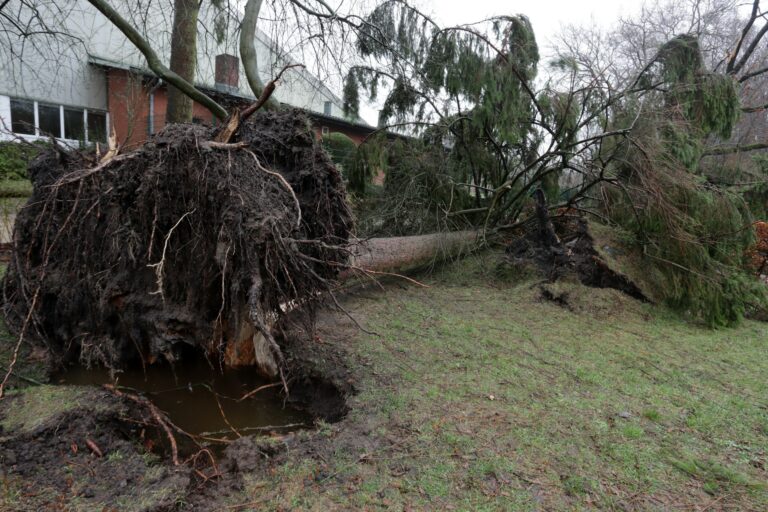
Much of the Buffalo area sits on heavy clay that stays waterlogged in spring. Saturated soil plus strong wind is a common recipe for uprooted trees, especially spruces and trees with root damage from past construction.
City trees and permits
In the City of Buffalo, trees between the sidewalk and the curb are typically part of the city’s street tree program, and you shouldn’t remove or trim them yourself. Contact the City of Buffalo through 311 about those. Rules for trees on private property vary between the city, towns and villages, so check before you book. We cover this in more detail in our guide to tree removal permits in Buffalo.
What’s included in a Falcon Tree Service removal quote
We think a good quote should be easy to read and hard to misunderstand. Every written estimate from Falcon Tree Service spells out:
- How the tree will come down: felled whole, sectioned by climbing, or lowered with rigging or a lift.
- What we’re protecting: roofs, gutters, fences, gardens and anything else nearby, and how we’ll protect it.
- Cleanup level: branches chipped and removed, and whether logs are hauled away or left cut to firewood length.
- Stump options: left flush to the ground, or ground below grade with the grindings cleaned up or left to fill the hole.
- Insurance: proof of liability and workers’ compensation coverage, available before any work starts.
- Timing: when we can schedule the job and roughly how long it will take.
If a quote you’ve received doesn’t cover these points, ask. A reputable company will be happy to explain.
How to save money on tree removal (without cutting corners)
There are honest ways to lower the cost of a removal. Here are the ones we actually recommend to customers:
- Book in late fall or winter. Once the leaves are down, we can see the tree’s structure clearly, and frozen ground lets equipment reach backyards with less lawn damage. Scheduling is also more flexible than during spring storm season.
- Keep the wood. If you burn wood or have a fire pit, leaving logs cut to length can knock a meaningful amount off the price.
- Bundle the work. Removing a dead tree, trimming two others and grinding a stump in one visit costs less than three separate visits.
- Deal with it early. A declining tree only gets more dangerous and more expensive. Removing it before it becomes a storm emergency is almost always cheaper.
- Clear the work area. Moving cars, patio furniture and planters before the crew arrives saves time on the day.
Red flags when comparing cheap tree removal quotes
Tree work is one of the most dangerous trades there is, and a very low quote can end up being the most expensive one. Watch out for these warning signs:
- No proof of insurance. If an uninsured worker gets hurt on your property or drops a limb on your neighbor’s car, you could be facing a claim. Always ask for a certificate of insurance.
- Cash only, no written quote. Get the scope, price and cleanup details in writing.
- Recommending “topping” a tree. Cutting the top off a healthy tree weakens it and is not a proper alternative to removal or pruning.
- Climbing spikes on trees that are staying. Spikes wound healthy trees and should only be used on removals.
- Pressure to decide on the spot. Unless it’s a true emergency, you should have time to compare quotes.
The International Society of Arboriculture’s consumer site, TreesAreGood.org, has helpful advice on hiring a qualified tree care professional.
Worried about a tree before winter?
Falcon Tree Service can inspect your trees and tell you honestly whether they need removal, pruning or nothing at all. Serving Buffalo, Amherst, Tonawanda, Cheektowaga, West Seneca, Orchard Park, Hamburg, Clarence and nearby communities. Call [PHONE] or book an inspection.
Does homeowners insurance pay for tree removal?
Sometimes. In general, many homeowners policies help cover removal when a tree falls and damages a covered structure like your house or garage. A healthy tree that’s still standing, or a tree that falls and hits nothing, is usually your responsibility. Every policy is different, so check yours and talk to your agent. The New York State Department of Financial Services also publishes consumer guidance on homeowners insurance. We explain the common scenarios in our post on whether homeowners insurance covers tree removal in New York.
If a tree has fallen on your home, take photos from several angles before anything is moved, and call your insurer as soon as it’s safe. We can provide photos and documentation of the job for your claim.
Tree down or hanging over your house?
Don’t wait for it to get worse. Our crew handles storm-damaged and hazardous trees across Buffalo and Erie County, day or night.
Frequently asked questions about tree removal cost in Buffalo
How much does it cost to cut down a large tree in Buffalo?
Large trees in the 60 to 80 foot range usually cost between $1,500 and $3,000 to remove in the Buffalo area. Trees over houses, near power lines or in hard-to-reach backyards can cost more.
Is stump grinding included in tree removal?
Not always. Many companies, including us, price stump grinding separately so you can choose. Ask for it on your quote if you want the stump gone.
What’s the cheapest time of year to remove a tree in Western New York?
Late fall and winter are often the most flexible times to schedule. The tree is dormant, the ground is firm, and crews aren’t dealing with spring and summer storm calls.
Can I remove a tree myself?
Small trees well away from anything, maybe. Anything large, leaning, dead, or near a house or wires is a job for insured professionals. Chainsaw and falling-tree injuries are serious and common.
Do I need a permit to remove a tree on my property in Buffalo?
It depends on the tree’s location and your municipality. Street trees in the city right-of-way are handled by the city. For trees on private property, check with your city, town or village before work starts.
How fast can Falcon Tree Service remove a tree?
Routine removals are usually scheduled within [X] days, depending on the season. Hazardous and storm-damaged trees are prioritized, and we offer 24/7 emergency response.
Get an honest tree removal quote from a local Buffalo crew
Tree removal isn’t something most people buy often, so it’s normal to feel unsure about pricing. Our goal at Falcon Tree Service is to make the number make sense: we’ll show you what’s driving the cost, give you options where there are any, and leave your yard as clean as we found it.
Want to learn more about how we work? See our tree removal service, our stump grinding service, or read up on how to tell if a tree is dead.
Request your free estimate today
Falcon Tree Service | [Street address], Buffalo, NY [ZIP] | [PHONE] | Open [hours], 24/7 for emergencies.
Contact us online or find us on Google Maps. Already worked with us? A quick Google review helps your neighbors find a crew they can trust.
Disclaimer
Prices in this article are typical estimates for residential tree removal in the Buffalo, NY area as of 2026 and are provided for general information only. Your actual cost depends on an on-site assessment. Information about insurance, permits and regulations is general and not legal or insurance advice; check with your insurer, your municipality and the relevant agencies for your situation.
Leave a Reply