Quick summary
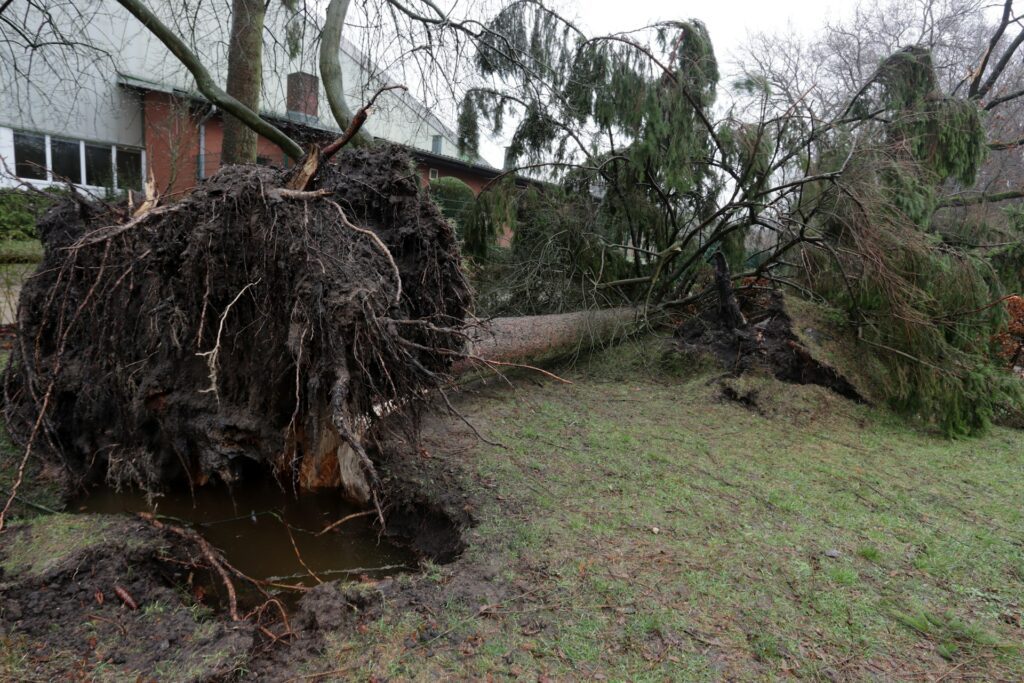
- Usually yes if a tree falls because of a covered event (wind, lightning, the weight of snow or ice) and damages a covered structure, like your house, garage or fence. Your deductible still applies.
- Repairs and removal are paid differently. Damage to the house comes out of your dwelling coverage, but the cost of removing the tree itself is usually capped by a small debris-removal limit, often around $500 per tree and $1,000 per storm.
- Usually no if the tree is still standing, even if it’s dead or leaning. Preventive removal is treated as maintenance.
- Limited or no coverage if a tree falls and hits nothing. Some policies pay a small amount for debris removal, often only if the tree blocks a driveway.
- Whose tree it was matters less than you’d think. If a neighbor’s tree lands on your house, you normally claim on your own policy first.
- Neglect can void coverage. If a tree was obviously dead and you ignored it, an insurer may push back, so dealing with hazard trees early protects you.
- Photos and a written report from a tree professional make any claim easier. Falcon Tree Service provides both on storm jobs.
It’s one of the first calls we get after a windstorm in Buffalo: “A tree just came down. Will my insurance pay for this?” The short answer is that homeowners insurance in New York usually covers tree removal when a tree falls on your house or another insured structure because of a covered event like wind, snow or ice. It usually doesn’t pay to remove a tree that’s still standing, no matter how dead it looks.
We’re not an insurance company, and we’d never tell you what your specific policy says. But at Falcon Tree Service we work alongside homeowners and adjusters after storms all over Buffalo and Erie County, so we see how these claims tend to play out on the ground. This guide explains the common scenarios in plain English, what to do in the first hours after a tree falls, and how to avoid the mistakes that slow claims down.
Table of contents
- How homeowners insurance treats trees
- Scenario guide: will insurance pay for my tree removal?
- The part most people don’t expect: removal limits
- What to do if a tree falls on your house
- Why tree condition matters to your insurer
- Tips for a smoother tree damage claim
- Frequently asked questions
- Talk to a local Buffalo crew
How homeowners insurance treats trees (the basics)
Most standard homeowners policies don’t insure trees for their own sake. What they insure is your house, other structures on the property, and your belongings. A tree only becomes an insurance issue when it causes damage to something that’s covered, and when the thing that brought it down is a covered peril.
In Western New York, the covered perils that matter most for trees are usually windstorms, lightning, and the weight of ice, snow or sleet. That last one is a big deal around here. Heavy, wet lake-effect snow is one of the most common reasons we see limbs and whole trees fail between November and March.
There are three questions an adjuster will typically ask:
- What caused the tree to fall? A sudden storm is different from slow decay.
- What did it damage? A roof or fence is covered property; a lawn usually isn’t.
- Could the damage have been prevented? An obviously dead or rotten tree that was ignored can lead to a denied or reduced claim.
The Insurance Information Institute has a good general explainer on how standard policies handle falling trees, and New York’s Department of Financial Services publishes consumer guides and handles complaints if you feel a claim was mishandled.
Scenario guide: will insurance pay for my tree removal?
Here’s how the most common situations usually play out under a standard New York homeowners policy. Your policy’s exact wording, limits and deductible always decide the final answer.
| What happened | Usually covered? | What that typically means |
|---|---|---|
| Storm knocks a tree onto your house or garage | Usually yes | Repairs are covered minus your deductible. Removing the tree is usually capped by a debris-removal limit, often $500–$1,000 per tree. |
| Tree falls on your fence or shed | Usually yes | Repairs covered under “other structures”, which has its own limit. Tree removal is subject to the same debris-removal cap. |
| Neighbor’s healthy tree falls on your house in a storm | Usually yes, on your policy | You claim through your own insurer. The neighbor generally isn’t at fault for an act of nature. |
| Neighbor’s obviously dead tree falls on your house | Yes, and possibly their liability too | Your insurer may pay and then pursue the neighbor’s insurer if negligence can be shown. |
| Tree falls on your car | Not under home insurance | Usually handled by the comprehensive coverage on your auto policy. |
| Tree falls and hits nothing | Limited or no | Some policies pay a small, capped amount for debris removal, often only if it blocks a driveway or ramp. |
| Dead or leaning tree still standing | No | Considered maintenance. Removal is the homeowner’s cost. |
| Tree falls because of rot or long-term neglect | Often denied or reduced | Insurers may argue the damage was preventable. |
| City street tree falls on your property | Your policy first; the city may be responsible | Claims against a municipality in New York have short notice deadlines, so act quickly. |
When a neighbor’s tree lands on your property
This surprises a lot of people. If your neighbor’s healthy tree comes down in a storm and hits your house, you normally file with your own insurance, not theirs. The thinking is that a storm is nobody’s fault. It’s a different story if the tree was clearly dead or dangerous and the neighbor had been warned. In that case your insurer may go after the neighbor’s insurer to recover costs. That’s why, if you’re worried about a tree next door, it helps to put your concern in writing to your neighbor.
When a city tree falls
In the City of Buffalo, street trees in the public right-of-way are maintained by the city’s Bureau of Forestry, and residents report problem trees by calling 311. If a city tree damages your home, report it right away, document everything, and file with your own insurer first. The city generally isn’t responsible for a healthy tree brought down by a storm; a claim usually depends on showing the city knew, or should have known, the tree was a hazard. If you do pursue a claim, New York’s General Municipal Law generally requires a formal notice of claim within 90 days, so don’t wait. If you’ve already reported a dangerous city tree through 311, keep that record.
Quick answers about coverage scenarios
Will my insurance pay to remove a dead tree before it falls?
Almost never. Insurers treat standing dead or dying trees as maintenance. The upside of removing one early is that it prevents a much more expensive claim, and a possible denial, later.
Does insurance cover stump grinding after a covered claim?
Usually not. Most policies cover getting the tree off the structure and repairing the damage, not grinding the stump or restoring the landscape.
Is there a limit on tree removal coverage?
Yes, usually. Even when a tree damages your home, many standard policies cap the cost of removing the tree at around $500 per tree and $1,000 per storm, separate from the repair coverage for the house. Check the “debris removal” and “trees, shrubs and plants” sections of your policy, and ask your agent whether a higher limit is available.
Tree down after a storm? Call Falcon Tree Service
We respond 24/7 across Buffalo and Erie County. Our crew will make the site safe, remove the tree carefully to prevent further damage, and photograph the scene before, during and after so you have documentation for your insurance claim. Call [PHONE] or visit our emergency tree service page.
The part most people don’t expect: removal limits
Here’s where a lot of Buffalo homeowners get surprised after a storm. Say a big silver maple comes down on your garage. The garage repairs are handled under your policy’s structure coverage, which usually has plenty of room. But removing the tree itself is often paid under a separate, much smaller debris-removal limit, commonly around $500 per tree and $1,000 per storm.
A large tree resting on a roof can easily cost more than that to remove safely, especially if it needs climbing, rigging or a crane. So even with a covered claim, part of the removal bill may be yours. It’s worth reading the debris-removal wording in your policy now, before storm season, and asking your agent whether higher limits are available. Our Buffalo tree removal cost guide shows what different removals typically cost, so you can compare that with your limit.
Know your costs before the next storm
Have a big tree near the house? Get a free written removal quote now, so you know how it compares with your policy’s debris-removal limit.
What to do if a tree falls on your house: a claim checklist
The first few hours after a tree comes down are stressful. Following these steps in order protects your family and your claim. We cover the safety side in more detail in our guide to the first 24 hours after storm damage.
- Get everyone safe. If the tree has hit the house, leave the damaged area. If there’s any chance of a gas leak, get out and call 911 and your gas utility (National Fuel serves most of the Buffalo area).
- Stay away from wires. Assume any downed line is live. Report it to your electric utility (National Grid or NYSEG, depending on where you live) and keep everyone, including pets, well back.
- Take photos and video before anything moves. Capture the tree, where it hit, the roots or break point, and the damage inside the house. Wide shots and close-ups both help.
- Call your insurance company or agent. Report the claim as soon as you can and ask whether they want an adjuster to see the tree in place before it’s removed.
- Prevent further damage. Most policies expect you to take reasonable steps like tarping a roof. Keep receipts for anything you pay for.
- Call a professional tree service, not a handyman. A tree resting on a roof is under tension and can shift suddenly. This is a job for an insured crew with the right rigging.
- Get everything in writing. Ask the tree company for an itemized invoice and a short written description of what caused the failure. Adjusters find this very useful.
- Keep a claim file. Photos, invoices, emails with your insurer, and the claim number, all in one place.
On storm jobs, Falcon Tree Service can provide dated photos and a written summary of the tree’s condition and how it failed. We’ve found that this kind of clear documentation helps homeowners avoid back-and-forth with adjusters.
Why tree condition matters to your insurer
Insurers expect homeowners to take reasonable care of their property. If a tree was visibly dead, hollow, split or leaning hard toward the house for months, an adjuster may decide the damage came from neglect rather than a sudden storm. That can lead to a reduced payout or a denial.
In our area, the trees we see this with most are:
- Ash trees killed by the emerald ash borer. They dry out and become brittle quickly. The New York State DEC has background on the pest.
- Silver maples with split or weak unions. Common across Buffalo, and prone to failing under heavy snow.
- Trees with root damage from driveway, sewer or foundation work, especially in clay soil that stays saturated in spring.
- Large trees with fungus or mushrooms at the base, which often signals internal decay.
If you have a tree like that near your home, the smartest financial move is usually to deal with it before winter. Our guides on leaning trees and tree removal cost in Buffalo can help you decide what’s worth doing and what it’s likely to cost.
Not sure if a tree is a risk? Get it looked at before winter
Falcon Tree Service offers free tree inspections across Buffalo, Amherst, Tonawanda, Cheektowaga, West Seneca, Orchard Park, Hamburg and Clarence. We’ll tell you honestly whether it needs removal, pruning or nothing at all, and give you a written quote. Call [PHONE] or book online.
Tips for a smoother tree damage claim
- Read your policy before storm season. Look for “windstorm”, “weight of ice, snow or sleet”, “other structures” and “debris removal”. Know your deductible.
- Photograph your trees now. A few dated photos of healthy trees can help show they weren’t neglected if one fails later.
- Keep records of tree work. Invoices for pruning, cabling or inspections show you’ve maintained your property.
- Don’t rush into a cheap cleanup. An uninsured crew that damages your roof further can complicate your claim. Ask for a certificate of insurance before work starts.
- Ask before you remove. Some insurers want to see the tree in place. If it’s not an immediate danger, check with them first.
For advice on choosing qualified tree care professionals, the International Society of Arboriculture’s consumer site TreesAreGood.org is a trustworthy resource.
Tree down or hanging over your house?
Don’t wait for it to get worse. Our crew handles storm-damaged and hazardous trees across Buffalo and Erie County, day or night, and documents the job for your claim.
Frequently asked questions
Does homeowners insurance cover tree removal in New York if the tree falls on my house?
In most cases, yes, if a covered event like wind or the weight of snow or ice caused it. Removal and repairs are usually covered, minus your deductible.
Does insurance pay to remove a tree that fell in my yard but didn’t hit anything?
Usually not, or only up to a small debris removal limit. Some policies only pay if the tree blocks a driveway or accessibility ramp.
Who pays if my tree falls on my neighbor’s house?
Typically your neighbor’s own insurance pays for damage to their home. You could be held responsible if your tree was obviously dead or dangerous and you ignored it.
Will filing a tree claim raise my premium?
It can. Whether it’s worth filing often depends on how the repair cost compares with your deductible. Your agent can explain how claims affect your rates.
Can Falcon Tree Service work directly with my insurance company?
We can provide photos, itemized invoices and a written description of the job for your claim. Your policy is between you and your insurer, so you’ll handle the claim itself.
What if my claim is denied?
Ask your insurer for the reason in writing and review your policy. If you believe it was handled unfairly, New York’s Department of Financial Services accepts consumer complaints.
Storm damage or a risky tree? Talk to a local Buffalo crew
Insurance can take some of the sting out of storm damage, but it’s not a plan for trees that are already failing. The best outcome is always the claim you never have to file. Whether you need a fallen tree removed safely tonight or want a straight answer about the maple hanging over your roof, Falcon Tree Service is here to help.
Learn more about our professional tree removal service, our 24/7 emergency tree service, or read our Buffalo tree removal cost guide.
Call for storm documentation and a free estimate
Falcon Tree Service | [Street address], Buffalo, NY [ZIP] | [PHONE] | Open [hours], 24/7 for emergencies.
Contact us online or find us on Google Maps. If we’ve helped you after a storm, a Google review helps your neighbors find a crew they can trust.
Disclaimer
This article provides general information about how homeowners insurance commonly treats tree damage in New York. It is not insurance or legal advice. Coverage depends entirely on your specific policy, its endorsements, limits and deductible, and the facts of your situation. Always confirm coverage with your insurance agent or company. Falcon Tree Service is a tree care company, not an insurance provider.

Leave a Reply